GRANDMA'S HOPE - AI Short Film
Grandma's Hope is proof of what AI Creative Direction actually means - not tools, not prompts, but a complete creative vision brought to life through generative media.
AI Creative Director/Filmmaker
Challenge
I spent the last 6 years designing how humans connect with technology emotionally - building voice interaction journeys, directing campaign creative across five international markets, and creating experiences for some of the world's most recognised brands. I understood storytelling. I understood production. I understood how to move people through a medium.
But visual narrative filmmaking had always required a team, a budget, and a technical pipeline that was simply out of reach for a single creative director working independently.
I had stories to tell. Specifically, personal ones - about ancestry, about hope passed between generations, about what grandmothers carry forward without knowing who will catch it. Stories that belonged to me in a way no brief ever could.
The challenge was not imagination. It was access.
I needed to know whether generative AI tools had matured enough to put a complete cinematic pipeline in the hands of one person - and whether I could direct a visually coherent, emotionally resonant short film from concept to submission in a week.
Grandma's Hope was the answer to that question.
Results
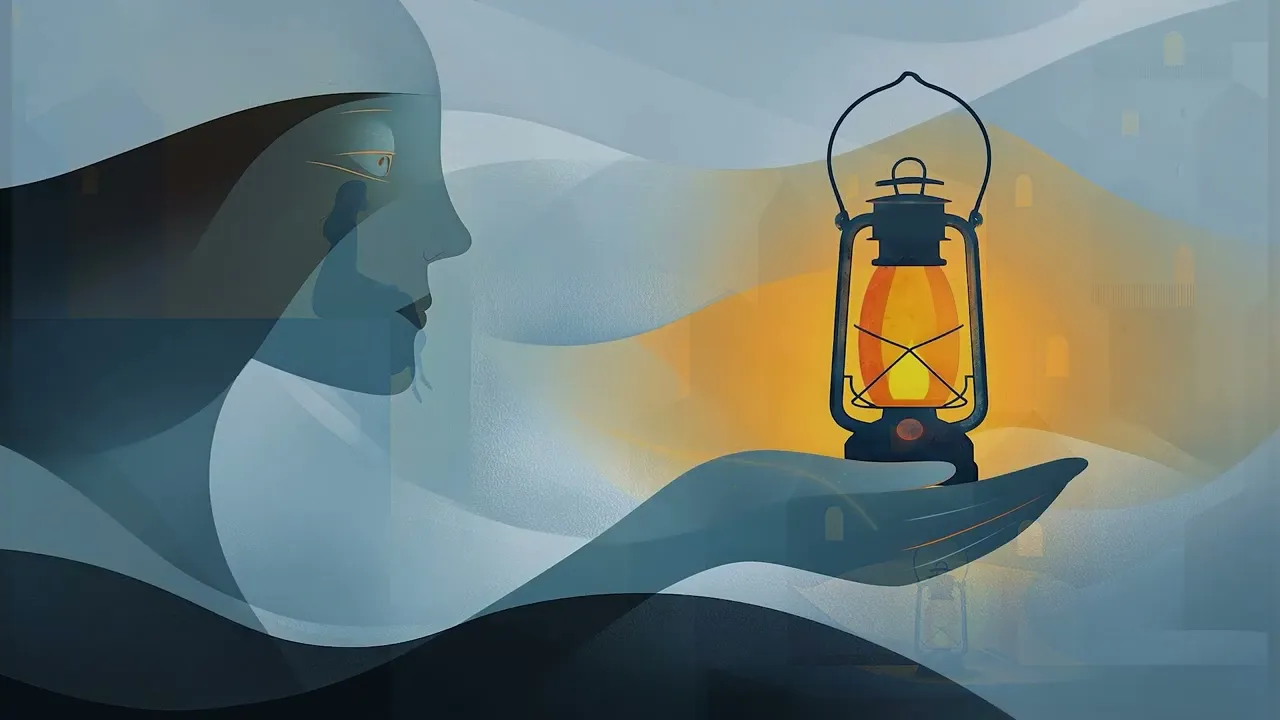
A clear visual language decided early made everything else possible. Rather than pursuing photorealism - the default mode of most AI filmmaking, I committed to a gouache illustration style inspired by 1960s Penguin book cover design. Flat opaque colour fields, bold graphic shapes, and a single inviolable colour rule: the entire film lives in cool silver-blue shadow except for one warm amber source - the lantern.
This decision solved three problems simultaneously. It gave the film a distinctive visual identity. It made consistency achievable across tools. And it made the emotional story legible in every single frame - wherever the amber glow appears, that is where hope is.
The key tools that made production possible:
Midjourney, Nano Banana 2 for all visual development and art direction across every shot
Ideogram for lantern consistency - ensuring the hero prop read identically across the entire film
Kling O1 via Freepik for cinematic image-to-video animation
Epidemic Sound for music - Grandma's Piano, which also gave the film its title
Adobe Premiere Pro for final edit and production
Magnifique for final upscaling across stills and video
Process
The entire film was made using image to video workflows, giving precise creative control over every shot.
1. Story Development Developed the concept, emotional arc and shot list collaboratively using Claude as a creative development partner. Every creative decision - what to keep, what to cut, what was missing, was made by me. The story of a grandmother sending a lantern across an impossible world until it finds someone who needs it emerged from a personal place. I had just left a five year role. The theme of new beginnings and inherited hope was not accidental.
2. Visual Direction Designed a complete art direction bible before generating a single image. Locked the style, the palette rule, the character approach - silhouettes throughout, no facial detail - and the lantern description. Then built a full shot list with bridging shots planned in advance, informed by filmmaking instinct developed during production.
3. Image Generation Generated all stills in Midjourney, Nano Banana 2 and Ideogram using the gouache style suffix across every prompt for consistency. Used Ideogram specifically to maintain the lantern's visual identity - the single most important prop in the film - across all shots. Upscaling was done using Magnifique.
4. Animation Animated all shots using Kling O1 via Freepik. Each motion prompt was written specifically for the emotional beat of that shot - the pace, the camera movement, and what needed to be alive in the frame. Motion strength and duration were adjusted per shot based on the feeling required. Upscaling was done using Magnifique.
5. Edit and Sound Assembled the final film in Adobe Premiere Pro. Music from Epidemic Sound - Grandma's Piano - was selected to match the emotional arc of the film. The track also inspired the final title, Grandma's Hope, replacing the working title The Lantern Keeper.














Creative Insights
Decide your visual language before you generate anything. Every hour spent iterating on style after generation has begun is wasted. Lock it first.
The colour rule was everything. One warm source against a cool world - and never break it. That single constraint gave the film its emotional spine and made every shot legible without dialogue or narration.
Silhouette characters solve consistency. Rather than fighting AI's tendency toward character variation, design characters who are defined by form rather than feature. It's a creative decision that becomes a production advantage.
Plan your bridging shots before you edit. The transitions that feel most natural in the final film were the ones I had to discover during the edit and go back to generate. Next time they go in the shot list from the start.
The motion prompt is a performance direction. Don't describe what you see - describe what you feel. "The flame breathes and the light shifts as if the world is exhaling" produces a different result to "flame flickers." Treat Kling like an actor, not a renderer.
A film only exists in the edit with music underneath it. Don't judge your work from stills and isolated clips. Assemble it first. Then decide if it works.
Grandma's Hope is a testament to what becomes possible when creative direction, personal story and generative tools converge in the hands of someone willing to trust their instincts on a deadline.