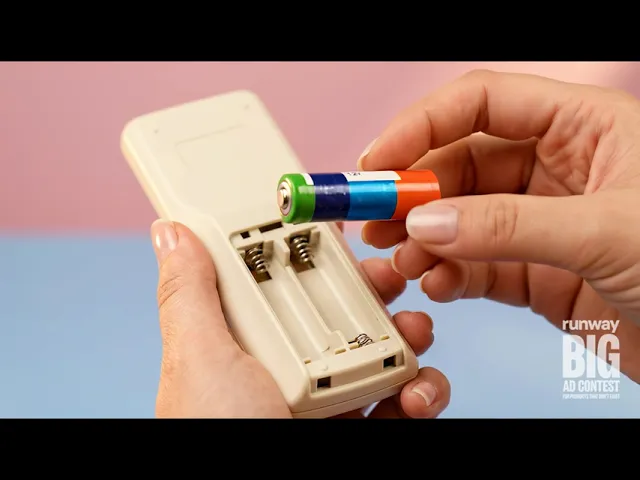
THE DRAWER/AA Battery - AI Ad
The Drawer is proof that AI creative direction can deliver tonal precision - not just visual spectacle. A brand ad where every frame is a deliberate comedic choice, built solo in five days.
AI Creative Director/Writer/Editor
Challenge
I spent the last 5 years producing campaign work for some of the world's most recognised brands - Tesco, Starbucks, easyJet, Disney, Coca-Cola, the UK Government to name just a few. I understood advertising. I understood how comedy lands. I understood the difference between a spot that sells and a spot that lingers.
But brand advertising had always required agencies, production companies, editorial houses, and six-figure budgets. It was a pipeline that belonged to teams, not to a single creative director working independently.
The Runway Big Ad Contest gave me 14 days and 7 fictional briefs. I chose Brief #3 - a rechargeable AA battery that outlasts relationships, jobs, and apartments. Everyone else's instinct would be to show life falling apart around the product. Mine was to show the archaeological evidence left behind.
The challenge was whether AI tools had matured enough to deliver deadpan comedy - the hardest register to get right, because it only works when every frame commits to it. A single shot that drifts tonally, breaks the symmetry, or over-acts the punchline collapses the whole piece.
Could I direct a polished, tonally consistent, 56-second commercial with a specific comedic voice - entirely solo, in five days?
This ad was the answer to that question.
Results
A locked visual language made everything else possible. I committed to a single aesthetic register: symmetrical centred composition, pastel colour palette, locked-off framing, film grain, deadpan tone. Every shot in the film honours that rule.
This decision gave the film a distinctive identity in a contest flooded with photo real entries. It made shot-to-shot consistency achievable across multiple AI tools. And it created the comedic contrast that the ending needed - the battery itself, bold and colourful, is the only thing in the world with any energy left.
The key tools that made production possible:
Nano Banana 2 for all start frame art direction and visual development
Runway Gen-4 and Veo 3 for primary video generation within the contest requirement
Kling 3.0 for drawer close-ups and flash-cut memories via start-and-end frame workflow
ElevenLabs for voiceover - dry, British, measured, no performance
Suno for original music and sound design
Adobe Premiere Pro for edit, timing and final mastering
Claude as partner across scripting, shot lists and prompt engineering
Process
The entire film was built using a disciplined image-to-video workflow, prioritising creative control over experimentation.
1. Concept Development Selected the brief, developed three comedic directions, and chose the strongest. Wrote the full voiceover script before generating a single frame - because the VO is the backbone every visual is timed to.
2. Visual Direction Locked the aesthetic before production began - pastel palette, symmetrical composition, locked-off framing, Fuji Pro 400H film stock language. Defined which shots would be drawer close-ups versus flash-cut memories. Wrote shot specific art direction for each of the 15 shots.
3. Image Generation Generated the hero drawer master shot in Nano Banana 2 first. Used it as a visual reference input across every subsequent drawer close-up to lock consistency. Generated flash-cut memories as standalone frames, each designed to match the same tonal register. Integrated the official product assets - the battery and silver tin packaging - as reference inputs for the final sequence.
4. Animation Animated every shot using Runway, Veo 3 and Kling 3.0. Each motion prompt was written to describe what needed to happen in the frame - minimal movement, deadpan stillness, one small gesture per shot. The goal was to fight AI's tendency toward unnecessary motion. The comedy lives in the gaps, not the action.
5. Edit and Sound Mastered and edited the film in Premiere Pro. Produced deadpan timing frame by frame - the pause before the battery reveal, the hard cut from front-facing to over-the-shoulder. Paired the VO with sparse, restrained sound design. The TV moment hits with sudden volume and the VO comes in quiet over the top - three layers of contrast doing the comedy work.




Creative Insights
Lock the visual language before you generate anything. Every hour spent iterating on aesthetic after production has started is an hour wasted. The ad was only achievable because the rules were set before the first prompt.
The brief comes first, always. It is tempting to let AI tools dictate what is possible. Resist that. The brief - a battery that outlasts everything - shaped every creative decision from concept to final cut. The tools served the brief, not the other way around.
Deadpan comedy lives in the edit, not the generation. No AI tool will give you perfect comedic timing. You build it in Premiere - frame by frame, pause by pause, cut by cut. Hold a shot one frame too long and it dies. Cut one frame too early and the joke doesn't land. The edit is where comedy happens.
Voice casting is a production decision, not a technical one. A wrong voice kills a comedy ad. Too warm and it's sentimental. Too performative and it's a commercial voiceover. The right voice sounds like a person telling a story at a dinner party. Choose accordingly.
Visual contrast is a feature, not a problem. The battery's bold colour against the muted pastel world is the whole point. If the product blended in seamlessly, it would disappear. Advertising rewards products that stand out.
AI creative direction is still creative direction. The tools are new. The craft is not. Concept, tone, rhythm, restraint - these are the same skills they have always been. The director's job is to know what the film needs and to protect it through every stage of production.
The Drawer is proof that comedy, craft, and a specific creative voice can live in AI filmmaking - not just spectacle. And that a solo creative director with a strong concept and disciplined process can deliver polished brand work in five days.